When I say that my favorite part of Split was the opening credits, that isn’t to say that the movie was entirely bad. It just had some incredible opening credits. Who knew that a typeface could generate such a feeling of dread?
That being said, M. Night Shyamalan’s latest psychological thriller does tend to undermine its own premise, leaving the impression that Shyamalan himself was split on what he wanted his movie to be.
The film is at its best in the small details. The 23 toothbrushes in the bathroom of Keven et al. (James McAvoy) and Casey’s (Anya Taylor-Joy) seemingly never-ending layers of shirts are great examples of smart character development. During the kidnapping at the beginning of the film, Shyamalan builds the suspense perfectly with small details like a pile of abandoned take-out boxes and the ding of the door open alarm. This subtlety is also reflected in Anya Taylor-Joy’s performance as a withdrawn and damaged teenager, and one of the most interesting dynamics in the movie is the contrast between Claire (Haley Lu Richardson) and Marcia’s (Jessica Sula) fight-or-flight reactions and Casey’s passivity.
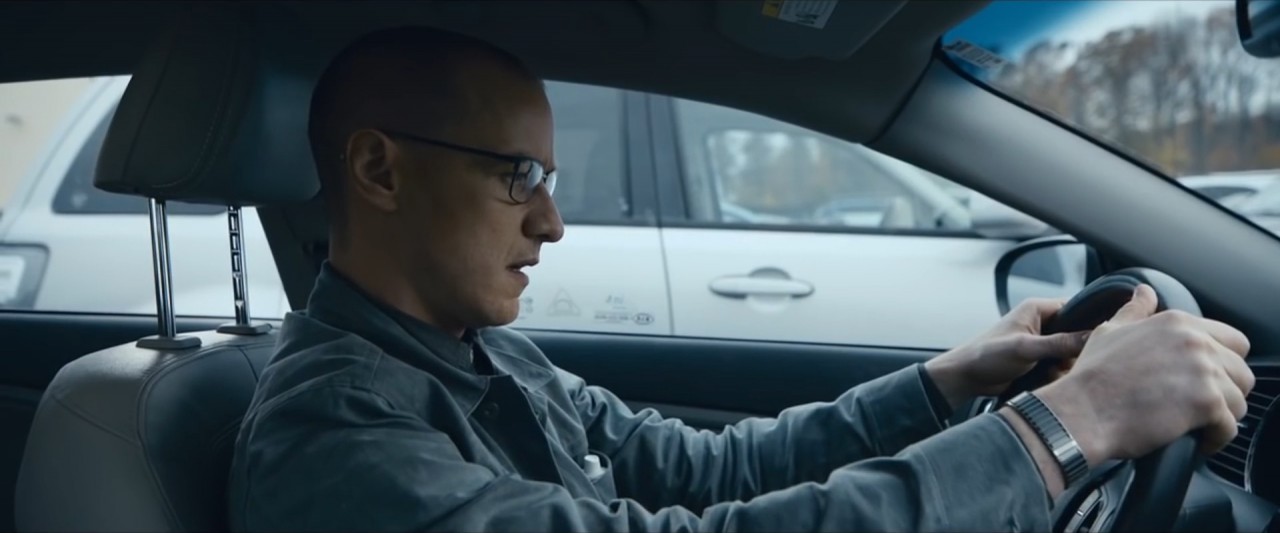
Subtlety, however, is the last word that could be used to describe James McAvoy’s character(s) or performance, and this is where the movie suffers. If we are to believe psychiatrist Karen Fletcher’s (Betty Buckley) thesis that DID creates fully-realized personalities, splitting one person into two or more people as distinct as individuals who do not share a body, then we need to see this reflected in Kevin’s 23 personalities. Unfortunately, the personalities that we do witness are reduced to one or two dominant traits, creating characters as exaggerated as Joy and Sadness in Pixar’s Inside Out. Dennis has OCD, Patricia is matronly, Barry loves fashion, and that’s all there is to them. Perhaps Shyamalan felt we needed these obvious markers to distinguish Kevin’s personalities from each other, but more uncertainty about which personality we’re dealing with would have bred more suspense, as we see in one scene when Dennis impersonates Barry while meeting with Dr. Fletcher. Because of this cartoonish portrayal of mental illness, Split suffers in comparison to another basement hostage movie from last year—10 Cloverfield Lane—in which clever writing and an outstanding performance by John Goodman make Howard Stambler a complex and inscrutable character that keeps us guessing until the end.
Split‘s schizoid mix of restraint and caricature is nowhere more apparent than in its final scenes. If we look at it from Casey’s perspective, the movie has become a story of abuse and coping mechanisms. The final shot of Casey making eye contact with the policewoman (Ameerah Briggs) expresses everything we need to know, and if the film had ended there, I would have left the theater with a feeling of somber triumph and a much higher opinion of the movie. But, as it is, we are left with an uncalled-for Bruce Willis cameo and a curious tie-in to Shyamalan’s Unbreakable. This superhero movie trope prompted me to wonder if Kevin, a.k.a. The Beast, is meant to become a part of some universe reminiscent of the Marvel or X-Men franchise, and I found it distasteful in a film that had so much potential for serious character study.


February 21, 2017 at 3:24 pm
Maybe I’ll wait until it’s on DVD and fast forward it to the end so I can laugh at the distasteful ending. Great critique.
LikeLike
February 23, 2017 at 2:30 am
Yeah I’d wait for DVD on this one. Or just watch 10 Cloverfield Lane again instead 🙂
LikeLike
February 23, 2017 at 7:54 pm
Love this!!! I may have to check this out…
LikeLike