Some call me a cynic. Some, a masochist. I like to call myself a realist. But whatever the reason, anti-romance is one of my favorite film genres.
Anti-romances aren’t devoid of romance; rather, they undermine romance with details reminiscent of everyday life. They don’t shy away from showing us the messiness, pettiness, and boredom that are a part of any relationship. Couples in anti-romances don’t always end up together, but they don’t always end up apart, either. They simply act in a way that feels true to character and true to life, leading to frustration, stagnation, melancholy, or ambiguity.
Valentine’s Day is the perfect opportunity to protest the sappiness and optimism of films like The Notebook and Sleepless in Seattle by choosing a film that gets closer to real life. So for all you fellow cynics out there, here, in no particular order, are my five favorite anti-romances of the decade so far (no spoilers).

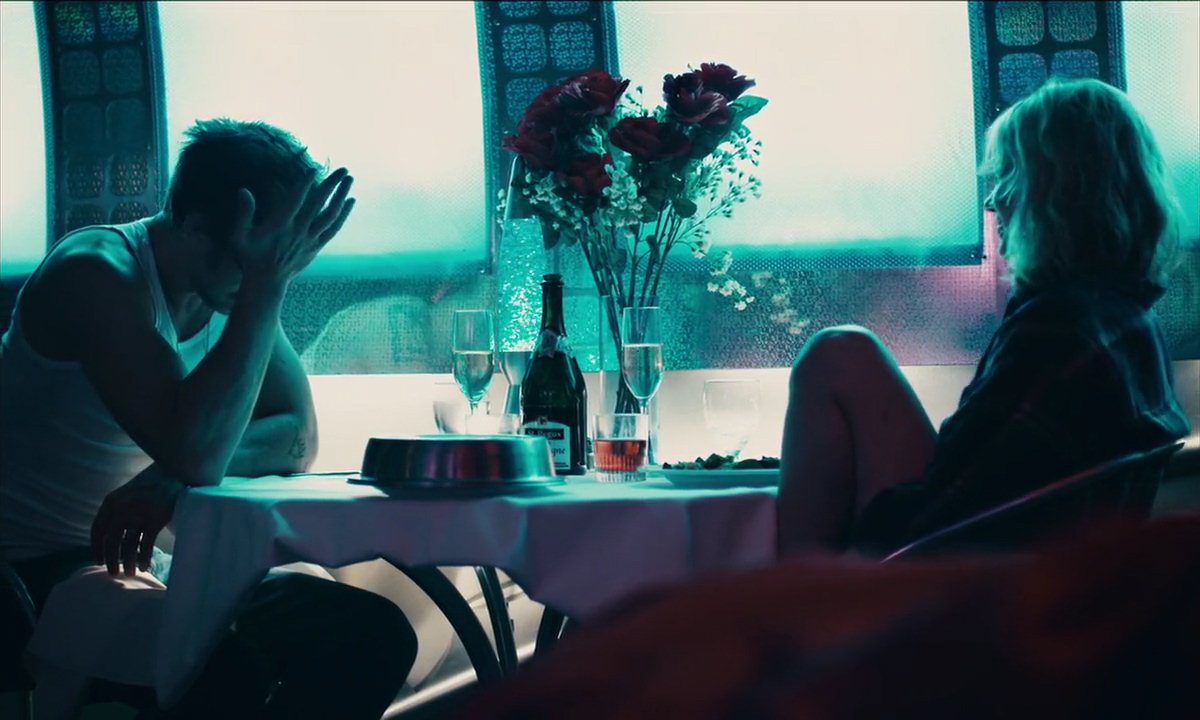
Blue Valentine
Derek Cianfrance’s Blue Valentine is one of those movies I put on when I need a good cry. But don’t expect a romantic tragedy along the lines of Titanic; Dean (Ryan Gosling) and Cindy (Michelle Williams) are rooted completely in the mundane, worn down by the day-to-day of parenthood and their jobs as a blue-collar worker and nurse, respectively. The film cuts between the early days of their romance and their life as a married couple several years down the road, and this structure allows us to see the failures of communication at the beginning of their relationship as well as the shreds of romance still present a few years later. Without being manipulative, Blue Valentine explores the full spectrum of emotions from joy to frustration to despair. It isn’t exactly an easy watch, but it’s a completely absorbing one.
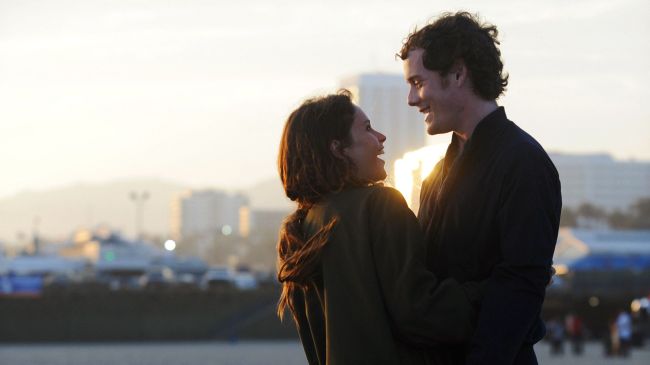
Like Crazy
Drake Doremus’s Like Crazy could be described as Blue Valentine with lower stakes, dwelling in frustration rather than tragedy, but I think that it brilliantly captures the realities of long-distance and young-adult relationships. The film begins with a typical “meet cute” between recent college grads Anna (Felicity Jones) and Jacob (Anton Yelchin), leading to a series of montages common to romantic comedies. But issues with Anna’s visa, jobs, and other relationships soon intervene. The characters have separate lives outside of this admittedly significant relationship, and their struggles to choose between a career and romance feel completely believable. The ups and downs of this movie might be frustrating—we want them to just make up their minds—but they are also true to the indecision of young adulthood.

I Believe in Unicorns
From young adulthood we move on to adolescence with Leah Meyerhoff’s debut feature I Believe in Unicorns. Davina (Natalia Dyer) is a creative teenager whose fairy-tale fantasies help her escape from the reality of taking care of her disabled mother (played by the director’s own mother, Toni Meyerhoff). When she meets Sterling (Peter Vack), she sees him as a salvation, a kind of Prince Charming, and chooses to ignore the obvious warning signs and take off with him on a road trip across the country. Although the film is only 80 minutes long, it manages to convey the full weight of Davina’s infatuation and the horror of her disillusionment. I Believe in Unicorns is both a beautiful and a disturbing reversal of typical teen romances.
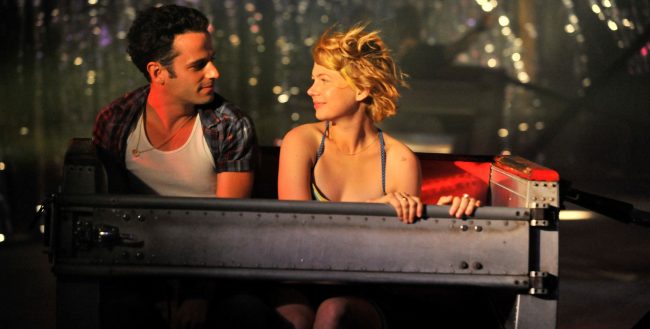
Take This Waltz
Michelle Williams pops up on this list again as Margot in Sarah Polley’s Take This Waltz, a movie which, besides rekindling my love of The Buggles’ “Video Killed the Radio Star” and making me want to move to Toronto’s Little Portugal neighborhood, is a nearly perfect anti-romance. Margot is torn between the comfort of life with her chicken-obsessed husband (Seth Rogan) and the novelty of an illicit relationship with the rickshaw-driving neighbor across the street (Luke Kirby). And while she knows, as a woman at the local pool states, that “new things get old,” her choices seem almost inevitable. Although it employs the little coincidences common to romantic comedies, the fatalism of this movie is in no way romantic or hopeful; no matter what action she takes, Margot seems doomed to boredom and emotional isolation. What’s amazing is that Polley manages to convey this boredom in a story which could easily become a true romance under different direction. And, what’s more, she does it without ever boring her audience.

Anomalisa
Charlie Kaufman’s Anomalisa, the story of middle-aged customer service expert Michael Stone’s (David Thewlis) visit to Cincinnati on his book tour, may be the only stop-motion anti-romance I’ve ever seen or ever will see. And yet, the use of puppets illustrates the awkwardness of the characters’ one-night-stand perfectly while allowing for the conceit of giving each character except love-interest Lisa (Jennifer Jason Leigh) the same voice. Michael (a character reminiscent of Caden Cotard from Kaufman’s Synecdoche, New York) illustrates perfectly the self-centeredness of romantic infatuation, telling Lisa, “Everyone is one person, but you and me. You’re the only other person in the world!” These characters go through each stage of a relationship, from infatuation to disillusionment, in one night. But combined with the humor of moments like Lisa singing an extended version of “Girls Just Want to Have Fun” and Michael’s attempt to buy a present for his son, the film strikes a perfect balance of comedy and despair.
These five films should be enough to keep you happily single until next Valentine’s day, but I would love to hear your picks for favorite anti-romances. If you have a suggestion, please leave it in the comments below.
 Weird Pretty Hand
February 16, 2017 at 5:48 pm
Again, Wonderful writing. Thank you for inspiring me to get out and watch some films. 👍🏼🌺🌴
LikeLike
February 18, 2017 at 4:18 pm
Thanks! I’d recommend all of these for sure!
LikeLike